SHOCKING NEWS!!!! Former Soviet spy finally revealed the Pyramid found by the Soviet Union on Venus
Former Soviet Spy Finally Reveals Pyramids Found on Venus by Soviet Union

Venus, often called Earth’s sister planet due to its similar size and mass, has long been veiled in mystery by its thick clouds. However, its surface is far from Earth-like, with average temperatures around 465°C (870°F) driven by a runaway greenhouse effect. Its atmosphere, mostly carbon dioxide with sulfuric acid clouds, creates surface pressure 90 times that of Earth’s sea level, equivalent to being 1 km underwater. Lacking a protective magnetic field, Venus is exposed to intense solar and cosmic radiation, making its environment hostile to conventional life. Its slow, retrograde rotation—where a day lasts longer than its year—and evidence suggesting past liquid water fuel speculation about a once-temperate planet. Ongoing geological activity, hinted at by vast volcanic plains and lava flows mapped via radar, keeps Venus a focal point for studying planetary evolution and extreme climates.
Early exploration faced immense challenges. In the 1960s Space Race, both the U.S. and Soviet Union targeted Venus. Initial probes struggled with unreliable rockets and communication systems, unprepared for Venus’s harsh conditions. NASA’s Mariner flybys and Pioneer Venus mission (late 1970s) provided atmospheric data, while the Soviet Venera program achieved historic landings. Despite early failures, the Soviets developed pressure-resistant capsules with cooling systems, enabling landers to survive Venus’s surface briefly. Venera 9 and 10 (1975) sent the first black-and-white surface images, followed by Venera 13 and 14 (1982), which delivered color photos and soil analyses revealing basaltic, volcanic terrain. Venera 15 and 16 (1983) used radar to map craters, tectonic features, and volcanic structures, suggesting a geologically active planet with a relatively young surface.
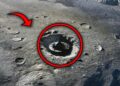
The Venera images, particularly from Venera 13, remain iconic, showing a rocky landscape under a yellowish-orange sky. Limited resolution and extreme conditions sparked debate over details, with some claiming anomalies like shifting rocks. In 2012, Russian scientist Leonid Ksanfomality reanalyzed Venera 13 images, suggesting a “scorpion-like” shape that appeared to move over time, hinting at possible biological activity. He also noted a disc-like object unrelated to the lander. While most scientists attribute these to camera artifacts, dust, or lens cap movements, Ksanfomality’s claims fueled speculation about non-Earth-like life forms adapted to Venus’s extreme environment. The lack of high-resolution, real-time imaging from the era leaves room for debate, spurring calls for new missions with advanced cameras and sensors.


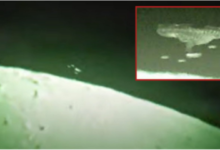

Unverified reports of leaked Venera footage, allegedly showing a moving, segmented figure resembling a scorpion, have circulated online. The footage’s authenticity is questionable, as stitching raw frames into a video was uncommon in the 1980s, and misalignment or editing could create illusions. Verification requires comparing frames to archival data, checking telemetry and lander orientation, but scattered or incomplete records complicate this. While intriguing, the footage underscores public fascination with Venus and the need for modern missions to capture clearer surface data.
Beyond surface anomalies, recent studies focus on Venus’s atmosphere, where conditions at 50–60 km altitude are milder (30–70°C). In 2020, scientists reported phosphine (PH3), a potential biosignature linked to anaerobic microbes on Earth, sparking excitement. However, follow-up studies questioned the detection’s validity, citing possible signal noise. Ammonia (NH3), another reactive molecule, has also been detected, suggesting an ongoing source—potentially volcanic, chemical, or biological. The cloud layers’ relative habitability, despite high acidity, raises the possibility of extremophile microbes with unique biochemistry. Upcoming missions aim to use spectroscopy and balloon probes to study these molecules, potentially confirming life or revealing new atmospheric processes.
Venus remains a paradox: extensively studied yet enigmatic. Its extreme surface challenges assumptions about life, while atmospheric findings and past mission data, like Venera’s, continue to inspire debate. Each discovery, whether chemical or visual, pushes the boundaries of planetary science and our understanding of life’s potential in the cosmos.